How to Put a Dehumidifier in Your Gun Safe for Maximum Effectiveness
Many gun owners know the struggle of keeping their firearms rust-free and in top shape. Humidity can be a sneaky enemy, causing corrosion and damage over time.
You’re not alone—many people grapple with controlling moisture in their gun safes.
To maximize your dehumidifier’s effectiveness in your gun safe, choose the right type—desiccant for small safes or electric for larger ones—and place it centrally, away from firearms and vents.
Regularly monitor humidity levels with a hygrometer and adjust as needed.
Combining methods like silica gel packs with your dehumidifier offers extra protection.
Proper placement and maintenance help prevent rust, ensuring your firearms stay in prime condition.
Keep going to uncover more tips for ideal moisture control.
Key Takeaways
- Choose the right dehumidifier type, like desiccant or electric, based on your safe’s size and humidity levels.
- Place the dehumidifier on a flat, central spot away from firearms and vents to keep moisture evenly controlled.
- Keep an eye on humidity with a hygrometer, aiming for 30-50% to best preserve your firearms.
- Perform regular maintenance, like recharging desiccants and replacing units, to keep it working well.
- Don’t block airflow or overload the safe with too many moisture control methods for the best results.
How to Choose the Best Dehumidifier for Your Gun Safe
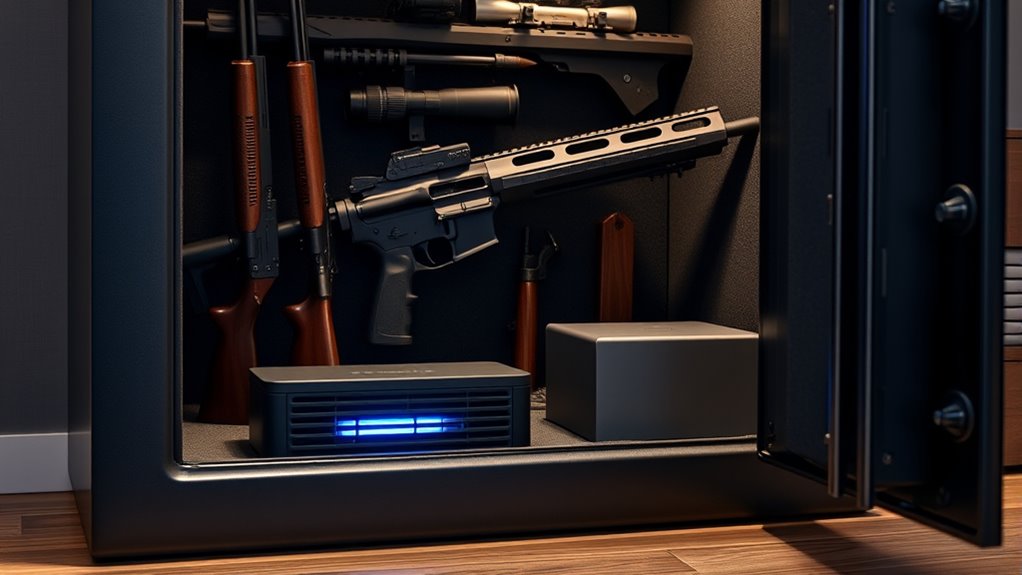
Choosing the right dehumidifier for your gun safe is key to keeping your firearms free from rust and corrosion.
There are different types available, so understanding your options helps you pick the best one for moisture control.
Desiccant dehumidifiers use silica gel or other moisture-absorbing materials, making them great for small safes or areas with low humidity.
Desiccant dehumidifiers absorb moisture using silica gel, ideal for small safes and low-humidity environments.
Electric models, like silica gel or refrigerant-based units, actively remove moisture and are better suited for larger safes or consistently humid spaces.
Think about the size of your safe and the typical humidity levels in your area when choosing.
Some dehumidifiers are reusable, while others need replacement packs.
The right choice will keep moisture in check without over-drying, which can also harm your guns.
What Are Your Options for Gun Safe Moisture Control?
Regarding controlling moisture in your gun safe, you have several options to consider beyond just dehumidifiers. Moisture absorption methods and humidity control solutions can help prevent rust and corrosion effectively.
Some popular choices include silica gel packs, desiccant canisters, and moisture absorbers like activated charcoal. These options work by drawing moisture out of the air, providing an extra layer of protection.
Here’s a quick comparison:
| Method | Advantages | Ideal Use Case |
|---|---|---|
| Silica gel packs | Reusable; easy to replace | Small safes, portable firearms |
| Desiccant canisters | Continuous moisture absorption | Long-term storage, larger safes |
| Activated charcoal | Odor control plus moisture control | Combines moisture and odor management |
Where and How to Place a Dehumidifier in Your Safe
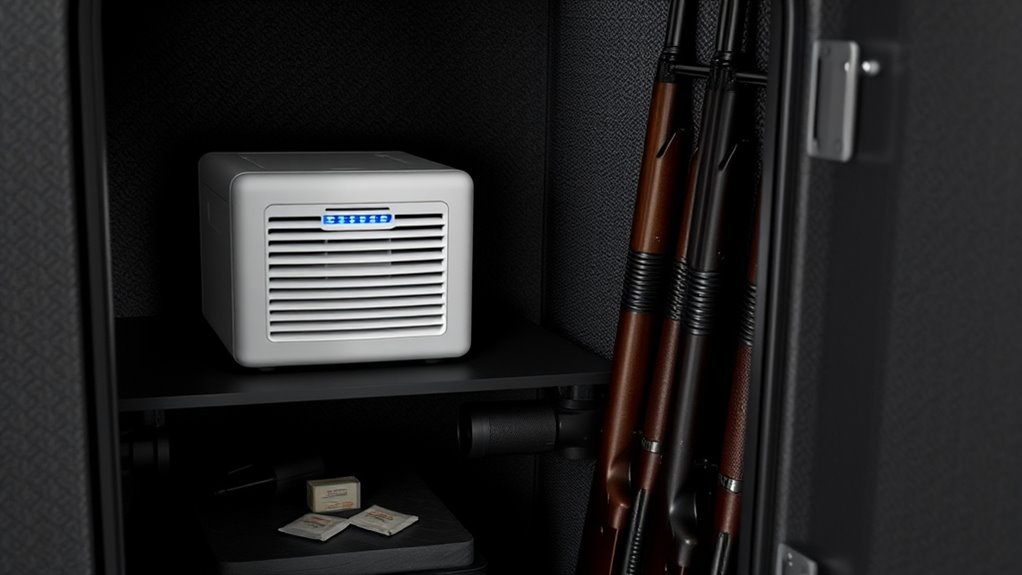
To maximize the effectiveness of a dehumidifier in your gun safe, it’s essential to position it correctly. First, consider the dehumidifier types—desiccant or electric—and choose one suited for your space.
For all types, place the dehumidifier on a flat surface, ideally away from the door and vents, to promote even moisture control. Proper safe ventilation is vital; avoid blocking vents or airflow pathways, which can hinder moisture removal.
Position the dehumidifier in a central location within the safe, ensuring it doesn’t touch the walls or firearms. This helps prevent uneven moisture absorption and keeps everything dry.
If your safe has adjustable shelves, place the dehumidifier on a stable, raised surface to allow air circulation around it. This strategic placement helps maximize moisture removal, prevent damp spots, and maintain a dry environment for your firearms.
Step-by-Step: Installing an Electric Dehumidifier
Sure! Here’s a more conversational version of your text:
—
First things first, you’ll want to pick the right dehumidifier for your safe. Make sure it’s suitable for the size of your safe and the level of humidity you’re dealing with. It’s all about finding that perfect fit!
Once you’ve got your unit, clear out some space around your safe and get it ready for installation. This helps ensure everything goes smoothly and safely when you’re setting up the dehumidifier.
Finally, follow the steps carefully to connect and position the dehumidifier inside your safe. Make sure it’s placed correctly so it can do its job effectively and keep your safe dry and protected.
Choosing the Right Unit
Choosing the right electric dehumidifier for your gun safe is crucial to keep moisture levels in check without over-drying the space. Focus on energy efficiency to save on electricity costs and ensure continuous operation.
Size matters too. Pick a unit small enough to fit comfortably inside your safe but still provide good moisture control. A compact, energy-efficient model will run well without wasting power.
Measure your safe’s interior dimensions carefully. This helps you find a unit that’s just the right size, avoiding ones that are too large or too small.
Go for a dehumidifier designed for small spaces. These units usually offer better control and efficiency, making your job easier.
Preparing Your Safe
Before installing your dehumidifier, it’s important to prepare your gun safe properly. Make sure the environment inside is clean and dry, removing any dust, debris, or moisture that could interfere with humidity control.
Check that the interior is well-ventilated and free of clutter, which can block airflow and make the dehumidifier less effective.
Also, verify that the safe’s door seals are intact to keep unwanted humidity from entering.
If your safe has adjustable shelves, think about removing or repositioning them for better airflow around the dehumidifier.
Proper preparation helps the dehumidifier work efficiently, keeping a consistent, safe environment for your firearms and valuables.
Following these steps ensures maximum effectiveness of your humidity control and protects your collection from moisture damage.
Proper Installation Steps
Installing an electric dehumidifier in your gun safe involves a few straightforward steps to guarantee it works effectively.
First, choose the right dehumidifier type—desiccant or electric—that suits your needs. Then, gather the necessary installation tools like a screwdriver, mounting brackets, or power cords.
Position the dehumidifier on a stable, flat surface inside the safe, ideally near an electrical outlet if needed. Secure it using mounting brackets if necessary, making sure there is good airflow around the unit.
Plug it into a power source, ensuring the cord doesn’t obstruct safe access. Confirm that the unit is level and unobstructed for peak operation.
Proper installation guarantees your dehumidifier functions efficiently, protecting your firearms from moisture damage.
Best Placement for Silica Gel Packs and Desiccants
Placing silica gel packs and desiccants in the right spots within your gun safe ensures maximum moisture absorption.
To get the best results, position packs where moisture tends to collect, like corners or near the door seals.
Avoid placing them directly on firearms or sensitive gear, as this can cause uneven drying. Spread out multiple packs evenly for broader coverage and better effectiveness.
Keep packs away from vents or openings to prevent moisture from bypassing the silica gel.
Stacking or clustering packs reduces airflow and makes them less effective at absorbing moisture.
Regularly check, replace, or recharge silica gel packs to keep them working well.
Thoughtful placement helps maintain consistent moisture control and protects your firearms from rust and corrosion.
Proper positioning of desiccants maximizes their benefits and keeps your gun safe dry and ready to use.
How to Monitor and Maintain Your Dehumidifier’s Effectiveness
To make sure your dehumidifier keeps doing its job well, it’s a good idea to check the humidity levels inside your safe regularly. If you notice the moisture isn’t being controlled as it should, it might be time to replace or recharge the unit.
And don’t forget to watch out for any signs of moisture buildup, like damp spots or mold—these can cause damage if not addressed. Keeping an eye on these things helps ensure your safe stays dry and protected.
Regularly Check Humidity Levels
Monitoring humidity levels regularly is key to making sure your dehumidifier is doing its job and keeping your gun safe from moisture damage. Checking often helps you see if your humidity control methods are working well.
Use a reliable hygrometer to track the humidity inside your safe. Check the readings at least once a week, especially when the weather is humid. If the humidity is too high, it might mean your dehumidifier isn’t reducing moisture enough.
Adjustments could be needed to bring the levels down. Keeping an eye on humidity confirms your safe stays dry and protected. Regular checks also help you catch early signs of equipment issues or maintenance needs.
This way, your dehumidifier keeps working efficiently and your guns stay safe from moisture damage.
Replace or Recharge Dehumidifier
Regularly inspecting your dehumidifier’s condition helps ensure it continues to work effectively. When it stops reducing humidity, it’s time to consider replacing it or recharging it.
For desiccant dehumidifiers, recharge methods often involve heating the unit to dry out the moisture-absorbing material, restoring its effectiveness. If recharging isn’t possible or the unit remains ineffective after several attempts, replacing it is the best choice.
Some desiccants have indicator beads that change color, signaling it’s time to replace or recharge. Electric dehumidifiers may need new moisture-absorbing pads or filters.
Always follow the manufacturer’s instructions for recharge procedures or replacement parts. This helps keep your gun safe dry and protected from moisture damage.
Inspect for Moisture Buildup
After replacing or recharging your dehumidifier, it’s important to keep an eye on how well it’s working. Regularly check your gun safe for moisture buildup, which can cause mold problems.
Use a hygrometer to monitor humidity levels—aim for between 30 and 50 percent. Also, look for signs of excess moisture like dampness or condensation.
| Indicator | Action Needed | Result |
|---|---|---|
| Visible condensation | Increase dehumidifier use | Lower humidity and prevent mold |
| Musty odor | Improve ventilation | Help prevent mold growth |
| Damp items | Reassess dehumidifier placement | Keep your safe dry |
Consistently monitoring humidity helps ensure your safe stays dry and free of mold.
Common Mistakes When Setting Up Your Gun Safe Dehumidifier
One common mistake people make when setting up their gun safe dehumidifier is placing it too close to firearms or other sensitive items. Proper placement is key to preventing moisture buildup without risking damage to your valuables.
Placing the dehumidifier too close to firearms risks damage; position it centrally for optimal protection.
If you position the dehumidifier directly against your firearms, it can cause uneven drying or even corrosion over time. Instead, place it on a stable surface in the middle of the safe, ensuring good airflow around it.
Neglecting humidity monitoring can also lead to ineffective results. You might think the dehumidifier is working when humidity levels stay high. Use a reliable hygrometer to regularly check moisture levels and adjust the dehumidifier’s placement or settings as needed.
Avoid overloading your safe with multiple moisture control methods that could interfere with each other. Correct placement combined with consistent humidity monitoring will maximize your dehumidifier’s effectiveness and help protect your firearms properly.
Tips for Using Multiple Moisture Control Methods Together
Using multiple moisture control methods can really boost your efforts to keep your gun safe, dry, and free from corrosion. Start by combining a dehumidifier with moisture absorption techniques like silica gel packs or desiccants. These help absorb excess moisture in corners and small spaces.
Incorporate humidity monitoring tools, such as hygrometers, to keep track of the internal environment accurately. Regularly check these tools to ensure humidity levels stay within the ideal range of around 40-50%. Adjust your dehumidifier settings or add more moisture absorbers as needed.
Using different methods together creates a layered defense. This prevents moisture buildup from multiple sources and helps protect your firearms from rust and damage over time. Remember, relying on just one approach might leave gaps, but combining them makes your storage much more effective.
Consistent monitoring and timely adjustments are key to maintaining the right conditions. This way, you can keep your firearms safe and in top shape for years to come.
How to Keep Your Firearms Rust-Free and Well Preserved
To keep your firearms free of rust and in great condition, managing the humidity levels is really important. Basically, you want to make sure the air inside your gun safe isn’t too damp, because moisture is a big culprit when it comes to rust. So, it’s a good idea to check your safe’s environment regularly.
If you use a dehumidifier, don’t forget to adjust it as needed. Keeping an eye on the humidity helps prevent moisture buildup, which can ruin your guns over time. And if you stick to a regular maintenance routine, your firearms will stay in top shape and rust-free for years to come.
Proper Humidity Levels
Keeping your firearms in peak condition isn’t just about safe storage; it’s also about maintaining proper humidity levels inside your gun safe. Humidity control is key to preventing moisture buildup, which can cause rust and corrosion.
Aim for a humidity level of around 40-50%. This range helps keep rust away while also avoiding mold or mildew. Using a reliable dehumidifier can really help, especially if you live in a humid climate.
Make sure to regularly check the hygrometer to keep the levels consistent. Avoid letting it get too dry, as that can damage wood finishes or lubricants.
Getting the humidity just right creates an environment where your firearms stay well-preserved, free of rust, and always ready for use. Keeping this balance is essential for long-term firearm care.
Regular Maintenance Routine
To keep your firearms rust-free and in top shape, establishing a regular maintenance routine is key. Make sure to check on humidity levels and your dehumidifier at least once a month.
Stick to a consistent schedule that includes cleaning and inspecting your gun safe, dehumidifier, and moisture absorber if you’re using one. Watch out for any signs of moisture or corrosion and take care of issues right away.
It’s also a good idea to replace or recharge desiccants or dehumidifier parts regularly to keep things dry. Proper upkeep helps prevent rust and damage, extending the lifespan of your firearms.
Staying proactive with your routine ensures your gun safe stays dry and your firearms remain in prime condition for years to come.
Troubleshooting Dehumidifier Problems and Ensuring Protection
If your dehumidifier isn’t working properly, your gun safe can be at risk of moisture damage. Quickly addressing common issues is really important to keep your valuables safe.
Troubleshooting helps identify problems like not removing enough moisture or the unit malfunctioning. To stay protected, check for power issues, leaks, or clogged vents. Keep an eye on humidity levels and replace or recharge desiccants when needed.
| Issue | Possible Cause | Solution |
|---|---|---|
| Not removing enough moisture | Dehumidifier malfunction | Repair or replace the unit |
| Humidity stays high | Blocked vents or leaks | Clear vents and seal leaks |
| Unit not turning on | Power supply issue | Check the outlet and reset the circuit |
| Too dry or too humid | Incorrect placement | Adjust the position for better performance |
Frequently Asked Questions
How Often Should I Replace or Recharge My Dehumidifier?
You should replace or recharge your dehumidifier when it becomes full or starts losing its effectiveness, usually every 30 to 60 days.
Regular maintenance, like checking for moisture and recharging or replacing the unit, helps keep it working at its best.
Keep an eye on the indicator or moisture-absorbing materials, and follow the manufacturer’s recommended recharge schedule.
This way, you can prevent excess humidity in your gun safe and keep your valuables protected.
Can a Dehumidifier Cause Any Damage to My Firearms?
A dehumidifier is like a gentle rain that keeps your firearms happy, not a storm that causes damage. When used properly, it won’t harm your firearms.
Just make sure humidity levels stay steady—avoiding excessive dryness or moisture, which can affect firearm maintenance. Proper humidity control prevents rust and corrosion, helping your guns stay pristine.
Always follow the manufacturer’s instructions, and your dehumidifier will be a safe, effective protector for your firearms.
What Is the Ideal Humidity Level for a Gun Safe?
You should aim for a humidity level between 30% and 50% for effective humidity control. Use a reliable moisture measurement device to check your gun safe’s interior regularly.
Maintaining this range helps prevent rust and corrosion without harming your firearms. Proper humidity control keeps your guns in great condition, so check the levels often.
Adjust your dehumidifier as needed to keep the environment just right. Staying on top of humidity levels is key to protecting your firearms over time.
Are There Safety Concerns With Electrical Dehumidifiers in Safes?
Safety is key when considering electrical dehumidifiers in safes. You’re safe if you choose the right dehumidifier types, like those with low voltage and automatic shut-off features.
Always place your dehumidifier in a spot that’s safe, dry, and secure, avoiding contact with firearms or valuables. Proper placement prevents electrical issues, overheating, or accidental damage.
Just follow manufacturer instructions, and you’ll keep your guns and gear secure and safe.
How Do I Know if My Dehumidifier Is Effectively Preventing Rust?
You can tell if your dehumidifier effectively prevents rust by checking the humidity indicators inside your safe regularly. If the humidity stays between 30-50%, it’s doing its job.
Look for no signs of rust or corrosion on your firearms and tools. Consistently low humidity levels show proper rust prevention.
Make sure to replace or recharge your dehumidifier as needed to maintain ideal conditions for rust prevention.
Conclusion
To keep your guns in tip-top shape, placing a dehumidifier correctly is key. Think of it as your safe’s personal armor against rust and corrosion.
Whether you opt for an electric model or trusty silica gel packs, make sure they’re positioned strategically and maintained regularly.
With a little care, you’ll be protecting your firearms better than a knight guarding his castle. No need for a time machine—just smart setup and a bit of vigilance.
Proper dehumidifier placement in your gun safe maximizes effectiveness and keeps your guns in perfect condition.