What Humidity Should Be Best for Your Gun Safe?
Many gun owners know the struggle of keeping their firearms in perfect condition. Humidity levels can make a huge difference, but it’s easy to get overwhelmed trying to find the right balance. You’re not alone—many people struggle with rust, corrosion, and mold inside their gun safes.
The ideal humidity for your gun safe is between 40% and 60%. This range helps prevent rust, corrosion, and mold, keeping your firearms in top condition.
Use a hygrometer to monitor moisture levels accurately, and consider devices like dehumidifiers or silica gel packs to maintain consistent humidity. Environmental factors like climate and location can affect this balance, so regular checks are key.
Keep going to uncover more tips on maintaining the perfect environment for your firearms.
Key Takeaways
- Keep humidity levels between 40% and 60% to help prevent rust and moisture damage.
- Use reliable hygrometers to keep an eye on the humidity and make sure it stays in that ideal range.
- Don’t let the inside get too dry, as it can harm wooden stocks and ruin firearm finishes.
- If you’re in a humid or coastal area, consider using dehumidifiers or silica gel packs to control excess moisture.
- Regularly check your safe for signs of humidity problems like rust, mold, or discoloration.
Why Humidity Control Is Critical for Your Gun Safe
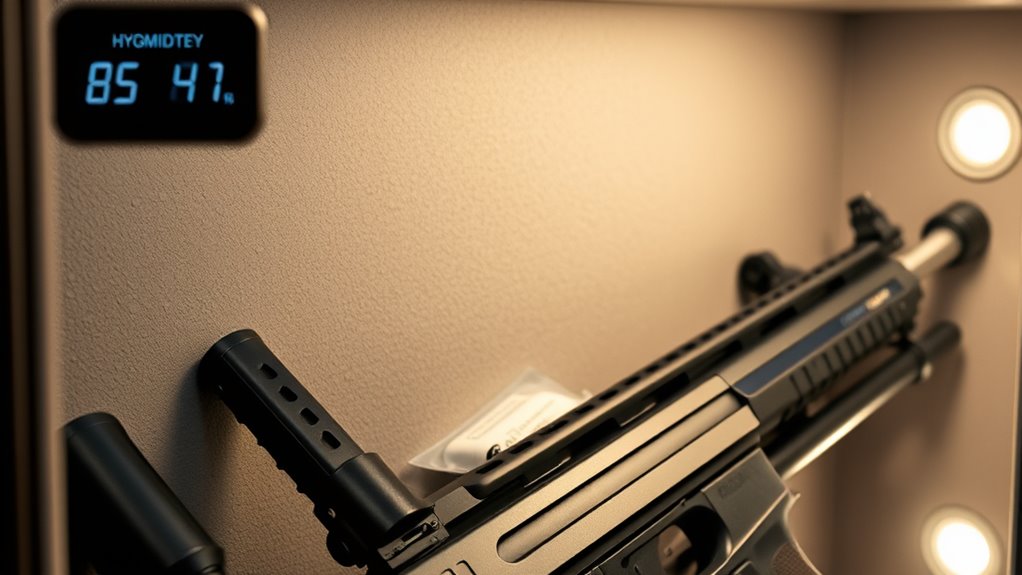
Humidity levels inside your gun safe are important because excess moisture can cause rust and corrosion on your firearms. Humidity effects like rust weaken the metal and reduce your guns’ lifespan.
That’s why choosing safe materials that resist moisture is essential. Quality safes often incorporate materials such as composite walls, powder-coated steel, or insulated linings that help regulate humidity.
Choosing moisture-resistant materials like composite walls and powder-coated steel helps regulate humidity and protect your firearms.
These materials act as barriers, preventing moisture from seeping in and causing damage. Without proper humidity control, even a well-made safe can become a breeding ground for corrosion, especially in humid environments.
Maintaining the right humidity levels guarantees your firearms stay in top condition, free from rust and deterioration. Regularly monitoring humidity effects and selecting the best safe materials can save you money and preserve your collection’s value over time.
Proper humidity control isn’t just a convenience. It’s a critical part of firearm maintenance.
What Is the Ideal Humidity Range for a Gun Safe?
Have you ever wondered what the ideal moisture level is to keep your firearms in top condition? The right humidity range is crucial because too much moisture can lead to rust, corrosion, and damage over time.
For most gun safes, maintaining a humidity level between 40% and 60% provides the best protection. This range helps prevent moisture from condensing on your guns, which can cause rust.
It also avoids overly dry conditions that might harm wooden stocks or finishes. To manage this effectively, you’ll want an accurate hygrometer to monitor the moisture level precisely.
Staying within this ideal range creates an environment that reduces humidity’s impact on your firearms, helping preserve their condition and longevity. Remember, consistent humidity control is key to preventing corrosion and keeping your guns in top shape for years to come.
How to Measure Humidity in Your Gun Safe Accurately
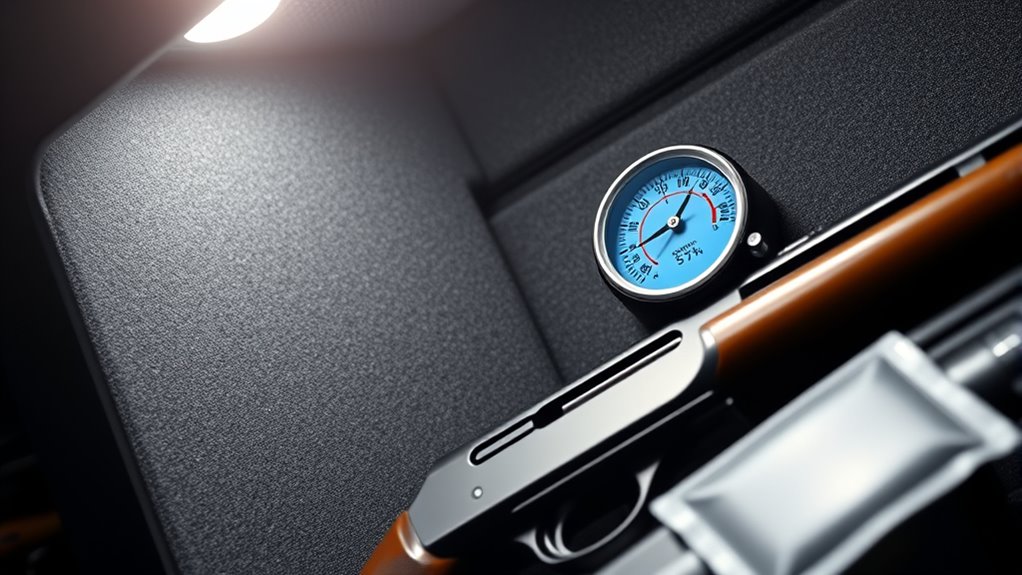
Wondering how to guarantee your gun safe stays at the right moisture level? Start by choosing reliable tools like humidity sensors and digital hygrometers to get accurate readings.
Ensure your gun safe stays dry by regularly monitoring with trusted humidity sensors and digital hygrometers.
To confirm precise measurement, consider these steps:
- Place a humidity logger inside your safe for continuous moisture mapping over days.
- Be mindful of environmental factors like seasonal changes and temperature effects that influence readings.
- Check safe insulation and air circulation, as poor insulation can trap moisture and skew measurements.
- Perform regular maintenance routines, such as recalibrating sensors and monitoring humidity levels, to catch fluctuations early.
Which Devices Help Maintain Proper Gun Safe Humidity?
What devices can you rely on to keep your gun safe at the perfect humidity level? Humidity regulators are your best tools for consistent moisture control. These devices automatically adjust the moisture levels inside your gun safe, preventing both excess humidity and dryness that can harm your firearms.
Desiccant packs are simple, affordable options that absorb moisture, but they need regular replacement or recharging. Electronic dehumidifiers are more advanced, using sensors and fans to maintain a steady humidity level without constant upkeep.
Some safes come with built-in humidity control systems, offering a seamless solution. Using these devices helps you prevent rust, corrosion, and mold, protecting your firearms over time.
Choose a humidity regulator that suits your safe’s size and your climate conditions for reliable moisture control. Proper device selection guarantees your guns stay in peak condition, preserving their value and functionality.
How Can You Tell If Your Gun Safe Has Too Much or Too Little Moisture?
You can tell if your gun safe has too much moisture if you notice rust or mold starting to appear on your firearms or inside the safe. That’s a clear sign things might be a bit too damp. On the flip side, if everything feels really dry and you see your guns starting to develop corrosion or if the wood is warping, then it probably doesn’t have enough humidity.
Keeping an eye out for these signs can really help you maintain the right moisture level, so your guns stay in good shape. It’s all about finding that sweet spot where everything stays protected without getting too damp or too dry.
Signs of Excess Moisture
Excess moisture inside your gun safe often shows up as rust spots on metal surfaces or corrosion on your firearms. To spot this early, use moisture detection tools or humidity indicators.
Look out for signs like rust or corrosion on guns, shelves, or hinges, which indicates high humidity. Condensation buildup on doors or walls is another clue. Mold or mildew spots on fabric or padding can also point to excess moisture.
A musty smell is a good signal that there’s too much moisture and possibly mold growing. Regularly checking your humidity indicators helps catch these issues early.
If you notice any of these signs, it’s time to adjust the humidity levels. Doing so will help prevent further damage caused by excess moisture.
Indicators of Insufficient Humidity
When humidity levels drop too low inside your gun safe, it can cause dryness that damages your firearms and other stored items. Signs of low humidity include rust spots, corrosion, or a musty smell, which shows moisture levels aren’t enough to prevent damage.
You might also notice wooden stocks cracking or shrinking, indicating the environment is too dry. If your guns feel dry to the touch or the safe’s interior looks dull and dusty, it’s a clear sign humidity isn’t sufficient.
Maintaining proper moisture levels helps prevent these problems by keeping a balanced environment. Watching for these indicators ensures your firearms stay protected from the damaging effects of too little humidity.
Signs of Humidity Problems in Your Gun Safe
If you start to see rust spots on your guns or inside your safe, that’s a pretty good sign humidity might be an issue. It’s one of those things that can sneak up on you if you’re not paying attention.
You’ll also want to watch out for warping inside the safe or mold growing on your stored items. These are clear signs that there’s too much moisture hanging around. Catching these problems early can save your firearms and safe from some serious damage down the line.
Rust Formation Indicators
Rust formation is a clear sign that humidity levels inside your gun safe are too high. When you notice rust, it means your weapons aren’t protected by effective rust prevention techniques. Look for these corrosion indicators:
- Tiny reddish-brown spots on metal surfaces
- Flaking or peeling paint or coating
- Slight discoloration or dull spots on metal parts
- Visible surface rust developing on firearms or accessories
These signs suggest excess moisture and the need to address humidity issues immediately. Rust can weaken metal components and compromise your firearms’ integrity. Regularly inspecting for corrosion indicators helps catch problems early.
Using dehumidifiers, silica gel packs, and proper ventilation can prevent rust formation. Staying vigilant guarantees your gun safe remains dry and your firearms stay in top condition.
Warping or Mold Growth
Rust spots are clear signs of excess moisture, but warping or mold growth indicate more serious humidity issues inside your gun safe. Warping of shelves or the safe’s interior suggests prolonged exposure to high humidity, which can damage your firearms and accessories.
Mold growth appears as fuzzy or discolored patches on surfaces and signals persistent moisture problems. To prevent this, keep humidity levels ideal and use silica gel packs or dehumidifiers.
Proper ventilation and regular inspections help you catch early signs of humidity issues. Addressing these problems quickly can save you money and protect your firearm collection.
Tips for Maintaining Consistent Humidity Over Time
Maintaining consistent humidity levels in your gun safe means regular monitoring and adjustments. This helps keep your firearms in great shape and prevents issues like rust or mold.
To do this, check the hygrometer weekly to see how the humidity is fluctuating. If needed, tweak your moisture control tools, such as dehumidifiers or humidifiers.
Make sure to keep the safe in a stable environment, avoiding big changes in temperature or humidity. Also, seal the safe properly to stop outside air from messing with the humidity levels.
Using Desiccants and Moisture Absorbers Effectively
Keeping your gun safe and dry is really important, and choosing the right desiccant plays a big role in that. You want to pick one that effectively absorbs moisture without causing any damage.
Once you’ve got the right desiccant, it’s equally important to place it properly inside your safe. Positioning it correctly helps it do its job better, making sure your firearms stay protected from rust and corrosion. Just a little careful placement can make a big difference in keeping your guns in top shape!
Choosing the Right Desiccant
- Silica gel is widely used, reusable, and works well at absorbing humidity.
- Clay desiccants are affordable and natural but aren’t as efficient as silica gel.
- Activated charcoal helps with moisture and odor control, making it a good choice for small safes.
- Calcium chloride is very absorbent but can produce liquid if it gets overwhelmed.
Choose a desiccant based on your climate, the size of your safe, and how often you plan to check moisture levels. Picking the right one helps keep your firearms protected from moisture.
Proper Placement Techniques
Proper placement of desiccants inside your gun safe maximizes their effectiveness in controlling moisture. To get the best results, position them in a way that encourages good airflow and avoids clutter that could block vents or restrict circulation.
Keep desiccants away from direct contact with firearms or valuables to prevent corrosion risks. If possible, adjust the safe’s orientation so moisture can escape naturally and airflow stays unobstructed.
Spread desiccants evenly across different areas instead of concentrating them in one spot. This helps absorb moisture more uniformly and keeps humidity levels stable.
Regularly check, replace, or recharge your desiccants as needed to maintain their performance. Proper placement and airflow management ensure they work efficiently, protecting your firearms from rust and damage.
How Climate and Location Affect Gun Safe Humidity
Your climate and location play a big role in the humidity levels inside your gun safe. They influence how much moisture naturally enters or escapes.
For example, humid regions have high outdoor humidity, which increases the risk of excess moisture inside your safe and can lead to rust.
Dry climates, on the other hand, can make your safe too dry, risking corrosion or cracking.
Coastal areas bring salt air and moisture, making it more challenging to control humidity and increasing the chance of corrosion.
Temperate zones experience fluctuating weather, causing seasonal swings in humidity. This requires you to make adjustments to keep conditions ideal.
Knowing your environment helps you choose the right humidity control methods. It’s important to adapt your approach based on where you live.
This awareness ensures your guns stay protected from rust and damage, no matter the climate.
Troubleshooting Common Humidity Issues in Your Gun Safe
When humidity levels in your gun safe become problematic, it’s usually due to fluctuations or excess moisture that can lead to rust or corrosion. Common sources include outdoor air entering through gaps, high ambient humidity, or even moisture from your hands touching firearms.
To troubleshoot these issues, start by identifying the root cause. Inspect seals and vents for leaks, and think about the environment where your safe is stored. Using moisture solutions like desiccants or silica gel packs can help absorb excess humidity.
If you notice persistent moisture, you might need to add a dehumidifier or improve ventilation. Regularly check humidity levels with a hygrometer and adjust your moisture solutions as needed.
Keeping your gun safe dry requires proactive management of humidity sources and regular maintenance of moisture control devices. Taking these steps helps protect your firearms from rust and keeps your safe’s interior secure.
Frequently Asked Questions
Can High Humidity Cause Corrosion on Firearms?
Yes, high humidity can cause corrosion on firearms. Excess moisture speeds up oxidation, which leads to rust and damage.
To prevent this, focus on controlling humidity in your gun safe. Using desiccants or dehumidifiers helps keep moisture levels in check, protecting your firearms.
Regular inspections and cleaning are also important. They help maintain proper humidity and minimize the risk of rust forming over time.
How Often Should I Check My Gun Safe’s Humidity Levels?
You should check your gun safe’s humidity levels at least once a month so you can catch any fluctuations early.
Use humidity monitoring tools to get accurate readings and make sure your safe is in good shape.
Incorporate regular safe maintenance into your routine. By staying vigilant, you prevent corrosion and protect your firearms.
This helps keep your safe in top condition and your collection safe from damage now and in the future.
Consistent checks keep humidity in check, giving you peace of mind and longer-lasting firearms.
Are There Any Risks of Using Chemical Moisture Absorbers?
Using chemical absorbers can reduce moisture damage, but they do come with risks. If you don’t keep an eye on them, they might dry out the air too much, which could cause gun corrosion or damage.
Some chemicals might leave residues that could stain or harm your firearms over time. It’s important to follow the manufacturer’s instructions and check the absorbers regularly.
Using a humidity gauge can help you keep the environment just right, preventing moisture damage without over-drying. Always monitor and maintain the right balance for safe storage.
Does Temperature Affect Humidity Control Effectiveness?
Yes, temperature fluctuations can really affect how well humidity is controlled, making it tough to keep perfect conditions. When temperatures jump or drop suddenly, the humidity inside your gun safe can either spike or drop, risking rust or corrosion.
Even small temperature changes can mess with your humidity control efforts. That’s why it’s important to choose a system that can adapt to these shifts. Proper insulation and temperature regulation are your best defenses against these destructive swings.
What Is the Best Way to Reset Humidity Levels After a Spill?
After a spill, quickly remove excess moisture to reset humidity levels. Start by thoroughly cleaning the spill and drying the area with a clean cloth or paper towels.
Use moisture management tools like silica gel packs or desiccants to absorb any leftover humidity. Proper cleanup helps prevent moisture buildup, keeping your gun safe and protecting your firearms from rust and corrosion.
Conclusion
Keeping your gun safe at the right humidity isn’t just a small detail. It’s the secret to protecting your firearms from rust, corrosion, and decay.
Get it wrong, and you risk turning your prized collection into worthless, corroded relics. Mastering humidity control might seem intimidating, but it’s the only way to keep your guns pristine, battle-ready, and preserved for generations.
Because your firearms deserve nothing less than perfection, maintaining proper humidity is key. With the right humidity level, you can ensure your gun safe remains the best environment for your collection.