5 Key Factors to Determine My Floor Can Support a Gun Safe
Many people struggle with finding the perfect spot for a gun safe, worried about whether their floor can handle the weight. It’s a common concern, and you’re not alone in this. Ensuring your floor can support your safe is key to keeping your valuables secure and your home safe.
To determine if your floor can support a gun safe, start by checking the building’s load specifications and measuring the safe’s weight and size.
Evaluate your floor’s material and construction, including joists or beams, to understand their strength. Inspect support structures for any weaknesses that may need reinforcement.
Choose a stable, level spot for placement, avoiding heavy appliances nearby. If you spot concerns or want peace of mind, consulting a professional can provide essential insights — keep going to learn more.
Key Takeaways
- Check the building’s maximum load capacity by looking at specs or getting a professional evaluation.
- Measure the size and weight of your gun safe so you know what kind of load it will put on the floor.
- Find out what kind of floor material and construction type you have to understand how strong it is.
- Look for any signs of weakness in the support structures, and see if reinforcement might be needed.
- Pick a spot that’s stable and level, making sure the weight is evenly distributed. You might consider using a support platform for extra stability.
Can Your Floor Support a Gun Safe? How to Check Your Floor’s Weight Capacity
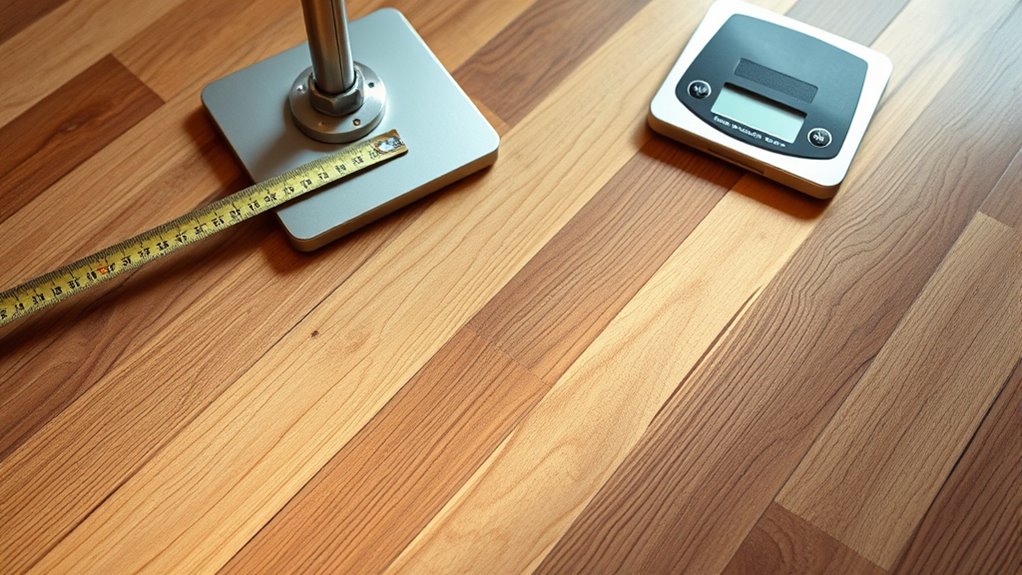
Wondering if your floor can handle the weight of a gun safe? First, you need to check your building’s specs or talk to a professional to find out the maximum load your floor can support.
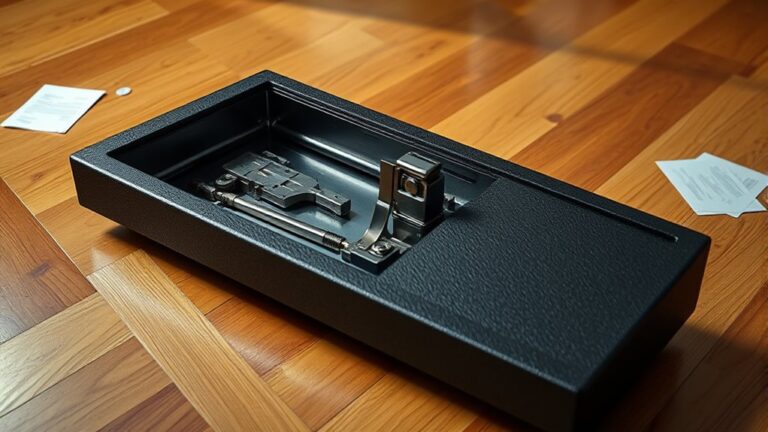
Keep in mind that how you distribute the weight matters. Placing the safe on a small, concentrated area can cause damage, so try to spread the weight evenly.
Distribute the weight evenly to prevent floor damage from a heavy safe.
Measure the safe’s dimensions and figure out its total weight. If your safe is large and heavy, you might need to reinforce the floor or pick a specific spot for placement.
Remember, it’s not just about the weight of the safe. How that weight is distributed across the floor impacts its support.
If you’re unsure, think about reinforcing the subfloor or placing the safe on a sturdy, level surface designed for heavy loads.
Taking these steps will help ensure your floor doesn’t buckle under the safe’s weight.
What You Need to Know About Your Floor’s Material and Construction Strength
Understanding your floor’s material and construction strength is key to safely supporting a heavy gun safe. Different floor materials like concrete, wood, or engineered flooring have unique load-bearing capacities.
Construction types such as joists, beams, or slab foundations affect how weight is distributed and overall stability. It’s important to consider whether your flooring can handle the weight of your safe without risking damage or collapse.
Flooring thickness matters too. Thicker, reinforced floors usually provide more support. If needed, adding reinforcement like extra support beams or concrete pads can help increase load capacity.
Proper installation techniques are essential. Make sure to evenly distribute the weight and avoid weak points. By understanding your floor’s material and construction strength, you ensure a secure foundation for your gun safe and prevent structural issues down the line.
How to Evaluate Your Support Structures and Reinforcements Needed
How can you effectively evaluate whether your current support structures are sufficient for your gun safe? Start by inspecting how load distribution is managed across your floor.
If the weight isn’t evenly spread or if the support beams seem weak, reinforcement techniques are needed. Check for existing joists or beams that can handle the added load.
Consider adding cross braces or steel plates to strengthen weak points. You might also want to consult a structural engineer for a professional assessment, especially if your floor shows signs of sagging or cracking.
Reinforcement techniques, such as installing additional support posts or upgrading joists, can significantly improve load capacity. Remember, your goal is to prevent concentrated pressure points that could cause damage or failure.
Regularly evaluating your support structures ensures your floor can safely bear the weight of your gun safe over time.
Where and How to Place Your Gun Safe for Optimal Load Support
To guarantee your gun safe is supported properly, place it on a solid, level surface that can handle its weight without sagging or shifting. Choose a safe location with good floor stability and even load distribution to prevent damage over time.
Think about your room layout to make sure there’s enough space for easy access while keeping safety in mind. Proper load balancing is essential; avoid placing the safe near heavy appliances or furniture that could weaken the floor’s support.
Position the safe where it won’t block doors, windows, or walkways, so accessibility isn’t compromised. If possible, place it on a reinforced section of the floor or use a platform to spread out the weight more evenly across the subfloor.
When to Consult a Professional for Floor Support Assessment and Reinforcement
If you notice signs of floor weakness or instability where you plan to place your gun safe, it’s important to consult a professional before proceeding. An expert can assess how the load is distributed and check if your floor’s structure can handle the weight.
Look out for signs like sagging, cracking, or uneven surfaces. These indicate that reinforcement might be needed. A professional will evaluate the support and suggest solutions, such as adding joists or supports, to ensure the weight spreads evenly.
Watch for sagging or cracks—these signals mean your floor may need reinforcement for safe safe placement.
Ignoring these issues can lead to damage to your floor or safety risks. Reinforcing the area helps keep your safe stable and secure over time. Getting an expert opinion early can save you from costly repairs later.
A proper assessment of load distribution and structural integrity is key to installing your gun safe safely and protecting what’s inside.
Frequently Asked Questions
What Is the Typical Weight Range of Common Gun Safes?
Most common gun safes weigh between 100 and 750 pounds, depending on their size and the materials used. Heavier safes usually have solid steel construction and reinforced locking mechanisms, which boost security.
When choosing a safe, think about its weight to make sure your floor can support it safely. Keep in mind, larger safes with stronger materials tend to be heavier.
Always check your floor’s weight capacity before installation to avoid any issues.
How Do I Identify Potential Weak Spots in My Floor?
Did you know that typical residential floors can support around 40 pounds per square foot? To spot weak spots, do a thorough floor inspection. Look for areas that sag or are uneven.
Pay special attention to spots where the load might not be evenly distributed, like near corners or support beams. Use a level or measuring tape to check for dips or dips.
Make sure to reinforce those weak areas before placing your gun safe. This will help ensure safety and stability.
Can Floor Joists Be Modified to Support Heavier Safes?
Yes, you can modify your floor joists to support heavier safes by reinforcing them and improving how the load is distributed.
You might add sister joists alongside the existing ones, install steel plates for extra strength, or use load-spreading beams to distribute the weight more evenly.
It’s important to consult a structural engineer to make sure these modifications are done correctly and meet safety standards.
This helps prevent potential damage or even collapse due to the increased weight.
How Does the Age of My Home Affect Floor Support Capacity?
Did you know that homes built before 1950 often used less durable building materials? The age of your home really affects its structural integrity and how much weight your floors can handle.
Older homes might have weaker joists or compromised support systems, so it’s important to evaluate these aspects carefully. If your house is getting up there in years, it’s a good idea to consult a structural engineer.
They can assess whether your floors can safely support the weight of a gun safe or other heavy items. Better to be safe and make sure your home can handle it.
Are There Specific Floor Types Better Suited for Heavy Safes?
Certain floor materials, like concrete or reinforced subfloors, are better suited for heavy safes because they handle load distribution more effectively.
Wooden floors, especially older or less reinforced ones, may struggle with the weight, risking damage or collapse.
To ensure safety, evaluate your floor’s material and construction. Adding support beams or a steel plate can improve load distribution, making your floor more capable of supporting a heavy gun safe.
Conclusion
By understanding your floor’s material, structure, and weight limits, you can confidently determine if it supports your gun safe.
Taking the time to evaluate support beams and proper placement often reveals surprises. Sometimes, a simple reinforcement is all you need.
When in doubt, consulting a professional guarantees safety and peace of mind. Ultimately, the right assessment and careful planning make sure your gun safe stays secure, no matter what surprises your home might hold.