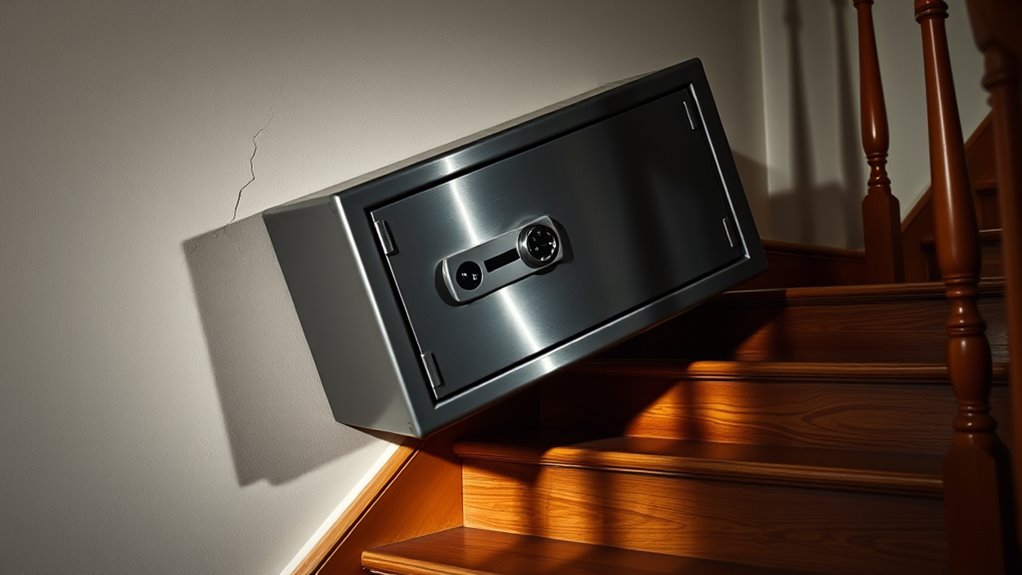
Risks of Putting a Gun Safe Upstairs
Many gun owners struggle with where to store their firearms safely and conveniently. You’re not alone—finding the right spot can be tricky, especially when considering safety and security.
Placing a gun safe upstairs can pose risks like damaging your floor if it’s not reinforced, especially since many upper floors aren’t designed for heavy loads.
You might also face fall hazards when accessing it, along with security concerns if it’s not properly anchored or if stairs are difficult to navigate quickly during emergencies.
Evaluating these issues carefully can help you make a safer, more secure choice—there’s more to consider that could impact your safety and convenience.
Key Takeaways
- Upper floors might not be strong enough to support the weight of a safe, which can cause floor damage or even collapse.
- Moving and installing a heavy safe upstairs can be tricky and might need extra floor reinforcement.
- Accessing the safe via stairs and walking on a slippery floor can increase the risk of falls, especially in emergencies.
- Security could be compromised if the safe isn’t anchored properly or if it takes too long to reach during urgent situations.
- It might be less convenient to reach or open the safe quickly when time is critical.
Why Is Upstairs Placement of a Gun Safe Potentially Risky?
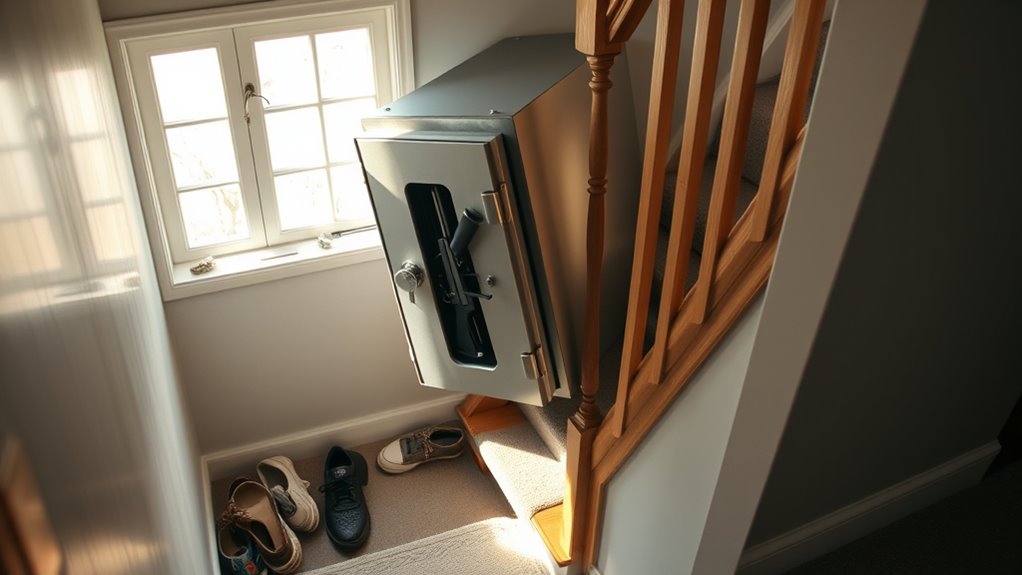
Placing a gun safe upstairs can introduce unnecessary risks because upper floors often lack the structural reinforcement needed to support its weight safely. Without proper assessment, the safe’s weight distribution can cause stress on joists and flooring, leading to potential damage or collapse.
Adhering to safety protocols is vital; you should verify the floor can handle the safe’s weight before installation. Many floors aren’t designed for heavy loads, especially if the safe is filled with firearms and valuables, increasing its overall mass.
Overloading can weaken the structural integrity of your home, risking injury or extensive repairs. It’s important to consult a professional to evaluate load capacity and reinforce the floor if necessary.
Can Your Upstairs Floor Support a Heavy Safe?
Thinking about placing a heavy safe upstairs? Well, first things first—it’s really important to find out how much weight your upstairs floor can handle. If it’s not designed to support something that heavy, you might need to consider reinforcing the structure.
Skipping this step could lead to damage to your floor or, worse, safety issues down the line. So, it’s a good idea to check with a professional or an engineer to make sure your floor can handle the load. Better safe than sorry, right?
Floor Load Capacity
Before bringing a heavy safe upstairs, it’s important to know if your floor can handle the weight. Your floor’s load capacity depends on how the weight from the safe is spread across the joists and flooring.
If the load exceeds the recommended limits, it could cause structural damage or even collapse. To find out if your floor can support the safe, check your joist spacing and the strength of the materials used.
Keep in mind that uneven load distribution can create stress points, which increases the risk of damage. It’s a good idea to talk to a professional or look at building codes to make sure your upstairs floor can safely hold the safe.
Knowing these limits helps you avoid costly repairs and safety hazards down the line.
Structural Reinforcement Needs
If your floor isn’t built to support the weight of a heavy safe, you might need to do some structural reinforcement before bringing it upstairs. It’s important to make sure your flooring can handle the load to prevent accidents.
Start by assessing your floor’s weight limits and compare that with the safe’s weight. If it seems close or you’re unsure, consider ways to improve weight distribution, like using reinforcement beams or plywood to spread the load evenly.
It’s also a good idea to consult a structural engineer. They can give you professional advice on whether your floor needs extra support or reinforcement.
Getting proper reinforcement ensures your floor can handle the safe’s weight, keeping everything safe and stable. Ignoring these steps could lead to structural failure, which risks damage and injury.
Are There Fall Risks When Accessing Your Safe Upstairs?
Plus, if you’re in a hurry to get to or from the safe, you’re more likely to make a mistake or lose your footing. So, it’s really important to take your time, be cautious, and make sure everything is in good shape before you access that safe upstairs.
Slippery Floor Hazards
Accessing your gun safe upstairs can be risky if the floor is slick or uneven. Slippery surfaces increase your chances of falling, especially when you’re hauling heavy safes.
To help reduce this risk, try placing anti-slip mats or tape on the floor to get a better grip. Installing textured or rubberized flooring can also improve traction.
And don’t forget to keep the area dry and clean. Spills or dust can make the floor even more slippery, so regular cleaning is a good idea.
Staircase Stability Concerns
Staircases can pose a serious fall risk when you’re moving a heavy gun safe upstairs, especially if the stairs aren’t sturdy or well-maintained. It’s important to check the staircase’s weight capacity; if it can’t support the safe’s weight, the structure might become compromised.
Weak or damaged stairs may wobble or even buckle under the load, making slips or falls more likely. Before you start, inspect the stairs for signs of wear, loose handrails, or creaky steps. If the staircase isn’t solid, it’s risky to depend on it for support.
Failing to evaluate these factors could lead to accidents, injuries, or damage to your safe or home. Always put safety first over convenience when moving heavy items upstairs.
Access Time Risks
Reaching your upstairs gun safe can be risky if you’re in a hurry or distracted. Narrow staircases or cluttered pathways make accidents more likely.
When you’re rushing to get to the safe, you’re more prone to missteps or slips. Distractions like alarms or phone calls can also divert your attention and increase the danger.
Poor lighting or physical barriers can slow you down or cause you to trip. Being aware of these risks helps you stay cautious and prevent falls.
Taking your time, keeping the stairs clear, and ensuring good lighting can make a big difference. These simple steps help reduce fall risks and keep you safer when accessing firearms upstairs.
How Secure Is an Upstairs Safe Against Break-Ins?
High-quality safes often include features like drill-resistant plates, complex lock mechanisms, and pry-proof construction. But determined burglars might try methods like lock picking, prying it open with tools, or even drilling into the safe.
While these methods aren’t easy, no safe is completely invulnerable if it’s not secured properly. An upstairs location can make it harder for intruders, but it doesn’t guarantee safety on its own.
To get the best protection, choose safes with proven security features, and think about additional steps like anchoring the safe to the floor or wall. Knowing your safe’s security features and understanding potential break-in tactics is key to keeping your valuables safe.
Does Placing a Safe Upstairs Increase Theft Vulnerability?
Placing a safe upstairs can influence its vulnerability to theft, but it’s not automatically safer or riskier. Your choice depends on how well you implement theft prevention and security measures upstairs.
Think about these factors:
- Accessibility for burglars: An upstairs location might be harder for intruders to reach quickly, which can lower theft risk.
- Visibility and awareness: If your upstairs area isn’t well monitored, thieves might see it as an easier target.
- Security integration: Using alarms, surveillance, and reinforced doors along with safe placement improves overall theft prevention.
While upstairs placement can deter some burglars, ignoring proper security measures might make things worse. To keep your safe protected, focus on strong security like secure locks and cameras, not just the location. Good planning and layered security are key to reducing vulnerability.
How Does Upstairs Placement Affect Safe Locking and Security Features?
The location of your safe upstairs can influence how well its locking and security features work, since some design elements might need adjustments based on where it’s placed. For example, locks that rely on electronic mechanisms might be affected by power fluctuations or difficulty accessing power sources.
Mechanical locking methods like combination or key locks usually perform reliably but could be harder to operate quickly if the safe is in an awkward spot. Upstairs placement can also affect security features such as reinforced walls or anchoring options.
If the safe isn’t properly anchored or if the security features aren’t suited for the environment, it becomes easier for intruders to bypass or remove it. Temperature and humidity fluctuations upstairs may also impact electronic components over time.
To provide the best protection, choose a safe with strong locking mechanisms and security features designed to withstand environmental factors common in upstairs locations.
Is an Upstairs Gun Safe Convenient or a Hassle?
Having a gun safe upstairs can be pretty handy if you want quick access in case of an emergency. It’s nice to have your firearm close by without having to go downstairs or to another part of the house. But, on the flip side, it can also be a bit of a hassle, especially if installing it turns out to be complicated or if you find it inconvenient to retrieve the gun daily.
Setting up a safe on an upper level isn’t always straightforward. Sometimes, the installation process can be tricky, and that added effort might make you wonder if it’s worth it. So, you’ll want to think about whether the convenience of quick access really outweighs the potential annoyances of installation and daily use.
Accessibility During Emergencies
When emergencies strike, quick access to your firearm can mean the difference between safety and disaster. An upstairs gun safe might slow down your response in urgent moments. Consider these points:
- Reaching the safe quickly can be tough if it’s upstairs, especially when you’re stressed.
- Navigating stairs can slow you down and increase risks during a crisis.
- Fumbling with locks or combination codes can waste precious seconds when every second counts.
If fast access is important, an upstairs safe might be more of a hassle than a help. You want your firearm within reach without obstacles during high-stakes situations. Finding the right balance between safety and accessibility ensures you’re prepared without sacrificing quick response.
Installation Challenges Upstairs
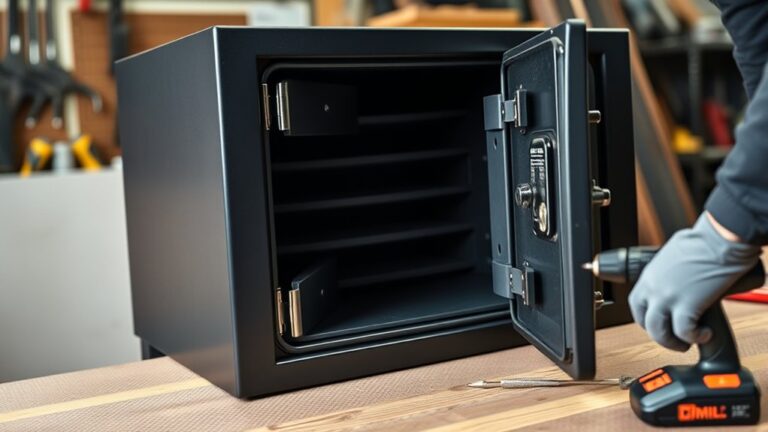
Installing an upstairs gun safe can be tricky because of the logistical hurdles involved. Planning the installation and space considerations carefully is key. You might need to reinforce the floors or modify doorways to support the weight.
Moving the safe upstairs can be physically demanding, especially in tight spaces. Proper placement is important for both security and accessibility, but narrow hallways or tight corners can make installation harder.
Here’s a quick overview:
| Aspect | Challenge | Solution |
|---|---|---|
| Space considerations | Limited room for maneuvering | Use furniture sliders or hire professional movers |
| Installation technique | Securing the safe properly | Reinforce the floor or use anchoring methods |
| Accessibility | Reaching the safe easily | Place it near entry points for convenience |
Daily Convenience Factors
While an upstairs gun safe offers added security, it can also impact your daily routine. Accessing it may be less convenient than a safe on the main floor.
If quick access is important, consider these factors:
- Time to retrieve: Going upstairs adds seconds, which matter during emergencies.
- Frequency of use: Safes used rarely might not be a problem, but daily routines suffer if you need quick access.
- Ease of access: Carrying or reaching for a safe upstairs can be cumbersome, especially if you’re in a hurry or have mobility issues.
Ultimately, an upstairs safe can make your daily routines more complicated, making quick access more challenging and less practical for everyday use.
What Are the Best Ways to Secure an Upstairs Gun Safe?
Securing an upstairs gun safe takes some careful planning to keep it safe from unauthorized access. Focus on choosing a model with advanced security features like biometric locks, reinforced steel, and tamper alarms.
Proper installation is just as important. Secure the safe to the wall or floor to prevent it from being stolen or accidentally tipping over. This simple step can make a big difference in safety.
Here’s a visual to help you picture the setup:
| Security Measures | Benefits |
|---|---|
| Biometric Locks | Quick access for authorized users |
| Anchoring to Floor/Wall | Prevents removal or tipping |
| Reinforced Steel | Adds durability and resistance |
Should You Consider Alternatives to Upgrading Your Upstairs Safe?
Instead of rushing to upgrade your upstairs safe, it’s worth exploring other options that might fit your needs and budget better. These alternatives can make your safe more accessible while reducing some risks.
Consider hidden compartments—discreet storage spots inside your home that offer quick access and extra security without the drawbacks of an upstairs safe. Biometric safes are another option; smaller, high-tech safes placed in more secure, convenient locations can give you faster access and better protection.
Decentralized storage is also worth thinking about. Spreading out firearms and valuables across multiple secure spots reduces the risk if one location gets compromised.
These alternatives give you flexible, secure storage options without the challenges of an upstairs safe. They can also boost your overall home security and make it easier to access your firearms when needed. Think about what works best for your lifestyle before investing heavily in upgrading your current safe.
How Do You Decide if an Upstairs Gun Safe Fits Your Home Security Plan?
Deciding if an upstairs gun safe fits into your home security plan requires careful thought about your household’s specific needs and layout.
Start by assessing how accessible the safe is—can you reach it easily in an emergency without putting safety at risk? Think about who needs quick access, like family members or trusted friends, and whether the location allows for a fast retrieval.
Evaluate safe accessibility for quick, safe access in emergencies by trusted household members.
Next, consider how placing the safe upstairs affects your overall home security. An upstairs safe might be more discreet but could be harder to reach quickly, especially in stressful situations.
Look at your home’s design as well. Is the upstairs area secure from potential intruders or children? Weigh the risks of leaving a safe in a less accessible spot against the benefits of hiding it.
Finally, find a balance between safe accessibility and your home’s security features. You want trusted users to get to the safe fast, but you also want to minimize risks of theft or accidental access.
Frequently Asked Questions
What Are the Fire Safety Concerns for Upstairs Gun Safes?
You should consider fire safety concerns for upstairs gun safes, especially regarding fire resistance and weight distribution.
Make sure your safe has a high fire-resistance rating to protect your firearms during a fire.
Proper weight distribution is also crucial to prevent putting stress on the upper floor, which could cause damage or accidents.
Regularly check the safe’s seals and placement to keep it safe and ensure it can handle potential fire hazards effectively.
How Does Humidity Upstairs Affect Safe Storage?
Humidity upstairs can really impact your safe storage, leading to moisture buildup that causes rust and corrosion.
To keep things dry, use dehumidifiers or silica gel packs inside the safe. Temperature changes can make humidity problems worse, so keeping a steady environment helps protect your firearms and valuables.
Regularly checking humidity levels is a good idea. It ensures your safe stays dry and your items stay in good condition.
Are There Noise Concerns When Opening a Safe Upstairs?
When opening your safe upstairs, noise can sometimes feel loud if the safe isn’t placed well. You might worry about disturbing others in nearby rooms.
A good spot with sound insulation can help muffle the noise of the door and tumblers. To keep things quieter, think about placing the safe on a soft surface or adding padding around it.
This way, your access stays discreet, like a whisper in a quiet room.
Can an Upstairs Safe Be Easily Hidden From Intruders?
Yes, an upstairs safe can be hidden from intruders if you pick a discreet spot with hidden access, like behind a false wall or inside furniture.
But watch out—if someone knows where to look or notices unusual modifications, visibility issues might come up.
To boost security, try blending the safe into its surroundings and avoid obvious signs of its presence.
This way, it’s much harder for intruders to find or access it easily.
What Are the Legal Considerations for Upstairs Firearm Storage?
Did you know that nearly 60% of firearm accidents involve improperly stored guns?
When storing a gun safe upstairs, make sure you follow local regulations to stay within the law. Ignoring these rules can cause legal issues if someone gets access to your firearm unlawfully or gets hurt.
Always check your area’s laws, secure your safe properly, and keep firearms out of reach of unauthorized people. Doing so helps you avoid legal trouble and keeps your loved ones safe.
Conclusion
Ultimately, weighing the risks and rewards will help you decide. If you’re thinking about putting a gun safe upstairs, consider stability, security, and safety first. Make sure your floors can support the weight, and that your access remains safe and easy.
Balancing bold decisions with cautious thinking is key. You want a secure, sensible spot that protects your guns without creating hazards in your home.
When it comes to risks of putting a gun safe upstairs, safety and security should always come first. Think about how easy it is to access your safe and whether your home’s structure can handle it.
By carefully considering these factors, you can create a safe, secure space that keeps your guns protected while maintaining safety throughout your home.